Whiskey Flavoring & Chemistry: A Beginner’s Guide
Discover how vanilla, oak, fruit, spices, barrel aging, and a splash of water can change what you smell and taste.
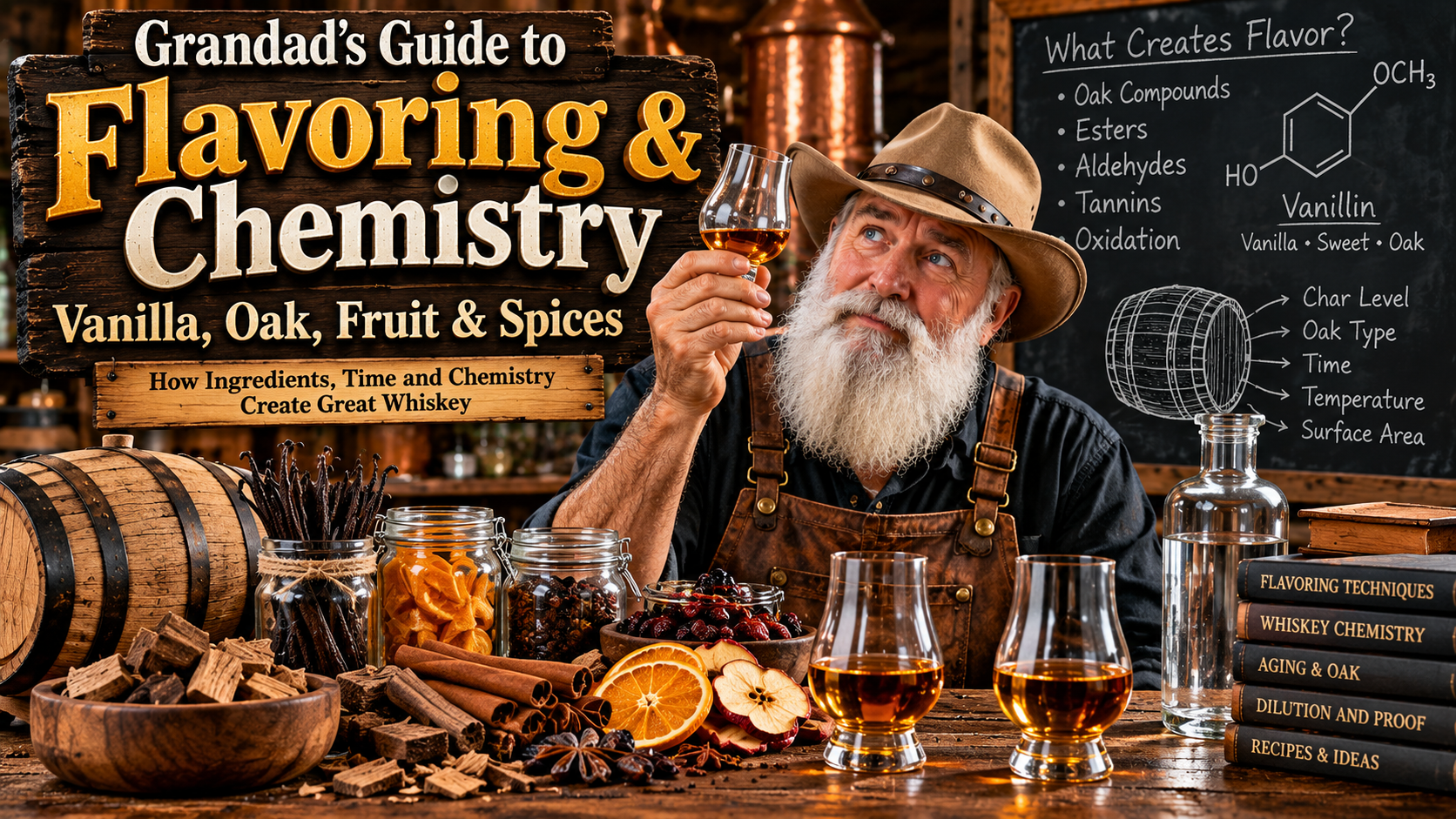
Why does one whiskey taste like vanilla and caramel while another seems fruity, spicy, or smoky? Much of the answer comes down to ingredients, fermentation, distillation, wood, time, and the way aroma compounds behave in your glass.
This beginner-friendly guide covers three connected subjects: flavoring whiskey with natural ingredients, the chemistry of oak aging, and why adding water changes whiskey’s flavor. You don’t need a chemistry degree to understand the basics—or a still to explore them using legally purchased spirits.
1. Whiskey Flavoring & Chemistry: Natural Ingredients
Natural additions can bring recognizable aromas to legally purchased whiskey. But ingredients differ in intensity, extraction speed, and stability. A little vanilla may complement oak; too much spice can overpower everything else.
Vanilla
Vanilla contains vanillin and many other aroma compounds. It can reinforce the vanilla-like notes already present in oak-aged whiskey.
Watch for: overpowering sweetness in the aroma or a one-dimensional vanilla character.
Oak
Oak can contribute vanilla, toasted, coconut-like, woody, and tannic notes. The results depend on the wood’s species, toast or char, surface area, and contact time.
Watch for: excessive bitterness, drying astringency, or harsh woodiness.
Fruit
Citrus peel, apple, peach, and other fruits can contribute bright or fresh aromas. Fruit also introduces water, sugars, acids, and potential spoilage concerns.
Watch for: mold, unexpected fermentation, off-odors, and poor storage practices.
Spices
Cinnamon, clove, and similar spices contain powerful aromatic compounds. They can dominate a sample quickly.
Watch for: harsh, medicinal, or overly intense spice notes.
Why flavors extract differently
Alcohol and water dissolve different compounds with different efficiencies. Ingredient size, concentration, temperature, and contact time also matter. This is why two jars with the same ingredient can develop very different flavor profiles.
A safer beginner approach
- Use legally purchased whiskey and food-grade ingredients from reputable sources.
- Work with a small, clearly labeled sample rather than changing an entire bottle.
- Introduce only one ingredient at a time so you can identify what caused the change.
- Observe aroma and taste periodically; stop if the result becomes unpleasant.
- Keep equipment clean. Refrigerate fruit-infused samples when appropriate, and discard anything showing mold or signs of spoilage.
2. Whiskey Aging Chemistry: What Oak Actually Does
Oak isn’t just a storage container. During barrel aging, compounds move between the wood and whiskey, while slow chemical reactions change the spirit over time. Heat treatment of the wood also creates flavor-active molecules.
| Compound or process | What it can contribute | Beginner explanation |
|---|---|---|
| Vanillin | Vanilla-like aroma | Can form as lignin in wood breaks down during heat treatment and aging. |
| Oak lactones | Woody, coconut-like notes | Naturally occurring oak-derived aroma compounds; levels vary by oak type and treatment. |
| Tannins and related phenolics | Drying mouthfeel, bitterness, structure | Wood-derived compounds that can make whiskey feel more astringent. |
| Toasting and charring | Caramelized, toasted, smoky, or spicy notes | Heat changes wood chemistry and which compounds can be extracted. |
| Oxidation and ester reactions | Changes in fruitiness and overall aroma | Slow reactions during maturation alter the balance of aroma compounds. |
Vanillin
Flavor: Vanilla-like aroma.
Can form as lignin in wood breaks down during heat treatment and aging.
Oak lactones
Flavor: Woody, coconut-like notes.
Naturally occurring oak-derived aroma compounds; levels vary by oak type and treatment.
Tannins and related phenolics
Effect: Drying mouthfeel, bitterness, structure.
Wood-derived compounds that can make whiskey feel more astringent.
Toasting and charring
Flavor: Caramelized, toasted, smoky, or spicy notes.
Heat changes wood chemistry and which compounds can be extracted.
Oxidation and ester reactions
Effect: Changes in fruitiness and overall aroma.
Slow reactions during maturation alter the balance of aroma compounds.
Does older always mean better?
No. Age alone doesn’t guarantee quality. Barrel size, climate, previous barrel use, warehouse conditions, wood treatment, and the original spirit all influence the outcome. A longer time in wood can produce more complexity—or too much wood character.
Is oak-chip flavoring the same as barrel aging?
No. Oak chips or staves can introduce wood-derived compounds, but they do not fully reproduce the oxygen exchange, evaporation, barrel geometry, and long-term reactions involved in traditional barrel maturation. Think of them as oak contact, not a shortcut that automatically recreates years in a barrel.
3. Why Does Whiskey Taste Different After Adding Water?
Adding water reduces alcohol by volume (ABV), but its sensory effect is more interesting than simply making whiskey weaker. Dilution changes the balance between ethanol, water, and aroma compounds—and can change which aromas reach your nose.
What you may notice
- Less alcohol heat on the nose and palate.
- Some fruit, floral, or oak aromas becoming easier to notice.
- Other aromas seeming quieter or less concentrated.
- Changes in texture and perceived sweetness.
What chemistry explains
Different aroma molecules interact differently with ethanol and water. Changing the mixture can affect their solubility and movement toward the surface and headspace above the glass.
Important: Water doesn’t always “open up” whiskey. Results vary by whiskey, dilution level, and the person tasting it.
Can adding water make whiskey cloudy?
Sometimes. Certain oils and other compounds that remain dissolved at higher alcohol strengths can become less soluble after dilution, creating a haze. This is often called louching. However, cloudiness can have other causes; appearance alone does not establish that a spirit is safe to drink.
For a related explanation, read Grandad’s guide to cloudy moonshine.
Further reading: A 2023 peer-reviewed study examined how adding water changes whisky aroma. Read Impact of Dilution on Whisky Aroma.
4. Grandad’s Simple Side-by-Side Tasting
This exercise uses commercially produced whiskey and focuses on observation, not production. You can use very small pours, and smelling alone is enough to compare aromas.
- Label two identical clean glasses A and B.
- Pour the same small amount of the same whiskey into each.
- Leave A unchanged. Add a few drops of drinking water to B.
- Gently swirl both, wait a moment, then compare their aromas without putting your nose deep into the glass.
- If you choose to taste, compare tiny sips and note any changes in alcohol warmth, fruitiness, oak, spice, and texture.
- Record what you noticed. There is no universally “correct” preference.
Questions to write in your tasting notes
- Did the vanilla or oak aroma become stronger or weaker?
- Did you notice fruit, spice, or floral notes you missed before?
- Did the alcohol sensation change more than the flavor?
- Which glass did you prefer, and why?
5. Common Beginner Mistakes
- Changing too many things: Combining multiple fruits, spices, and oak makes it hard to understand the result.
- Assuming more is better: Strong flavors can overwhelm the whiskey’s original character.
- Using unknown plants or extracts: Natural does not automatically mean food-safe.
- Confusing wood contact with true maturation: Oak-derived flavor is only one part of barrel aging.
- Expecting water to improve every whiskey: Dilution changes the aroma balance; it doesn’t guarantee an upgrade.
Frequently Asked Questions
What gives whiskey its vanilla flavor?
Vanillin and related aroma compounds are important contributors. Oak aging is a common source, although a whiskey’s overall aroma also reflects its ingredients, fermentation, distillation, and maturation.
Does adding fruit to whiskey make it sweeter?
It can, depending on the fruit, preparation, and how much sugar enters the drink. Fruit can also add acidity and aroma, which may change perceived sweetness even without a large sugar increase.
Does adding water make whiskey smoother?
It can reduce perceived alcohol heat, but it may also mute some flavors. Preference varies, so compare the same whiskey before and after a small water addition.
Do oak chips make whiskey age faster?
They can increase contact with wood and change flavor, but they do not reproduce every process involved in traditional barrel aging.
Can I flavor store-bought whiskey at home?
In many places, personal culinary infusions using legally purchased spirits are treated differently from distilling alcohol, but rules can vary. Check applicable local laws and never sell or distribute homemade flavored alcoholic beverages without the required permissions.
Explore More from Grandad’s
Curious about grain choices? Try the Mash Calculator & Grain Bill Builder. If you’re troubleshooting an unusual appearance, visit Why Is My Moonshine Cloudy?. For a flavor-related problem, see Why Does My Moonshine Taste Bitter?.
Educational and legal notice: This article explains flavor chemistry and culinary comparisons using legally purchased spirits. It does not authorize home alcohol distillation. Distilling beverage alcohol without required permits is prohibited under U.S. federal law, and additional state and local rules may apply. Alcohol is for adults of legal drinking age; consume responsibly.