Peach Brandy & Fruit Spirits
Long before modern distilleries filled store shelves, orchard harvests helped shape a rich tradition of fruit-based spirits. From peaches and apples to plums and cherries, the fruit itself became part of the story.
When the Harvest Became a Spirit
Fruit brandy has roots in centuries of European distilling traditions. As settlers carried knowledge across the Atlantic, they encountered different growing conditions and new opportunities for orchard-based production.
Peaches became an important crop in parts of the American South. When harvests were plentiful, preserving or processing ripe fruit was a practical concern for growers.
Fermentation and distillation became part of the wider story of how communities used their harvests, alongside drying, preserving, cooking, and cider-making.
More Than Something Sweet
Fruit spirits were part of a larger agricultural world in which seasonal harvests, local crops, trade, and regional tastes helped determine what people made and consumed.
Seasonal Harvests
Fresh fruit was highly seasonal. Growers used several preservation and processing methods to make use of what the orchards produced.
Regional Character
Different climates favored different fruits. Local harvests helped shape distinctive drinking traditions across communities.
Craft & Trade
Fruit-based spirits became part of regional commerce and craftsmanship, although production practices varied by era and place.
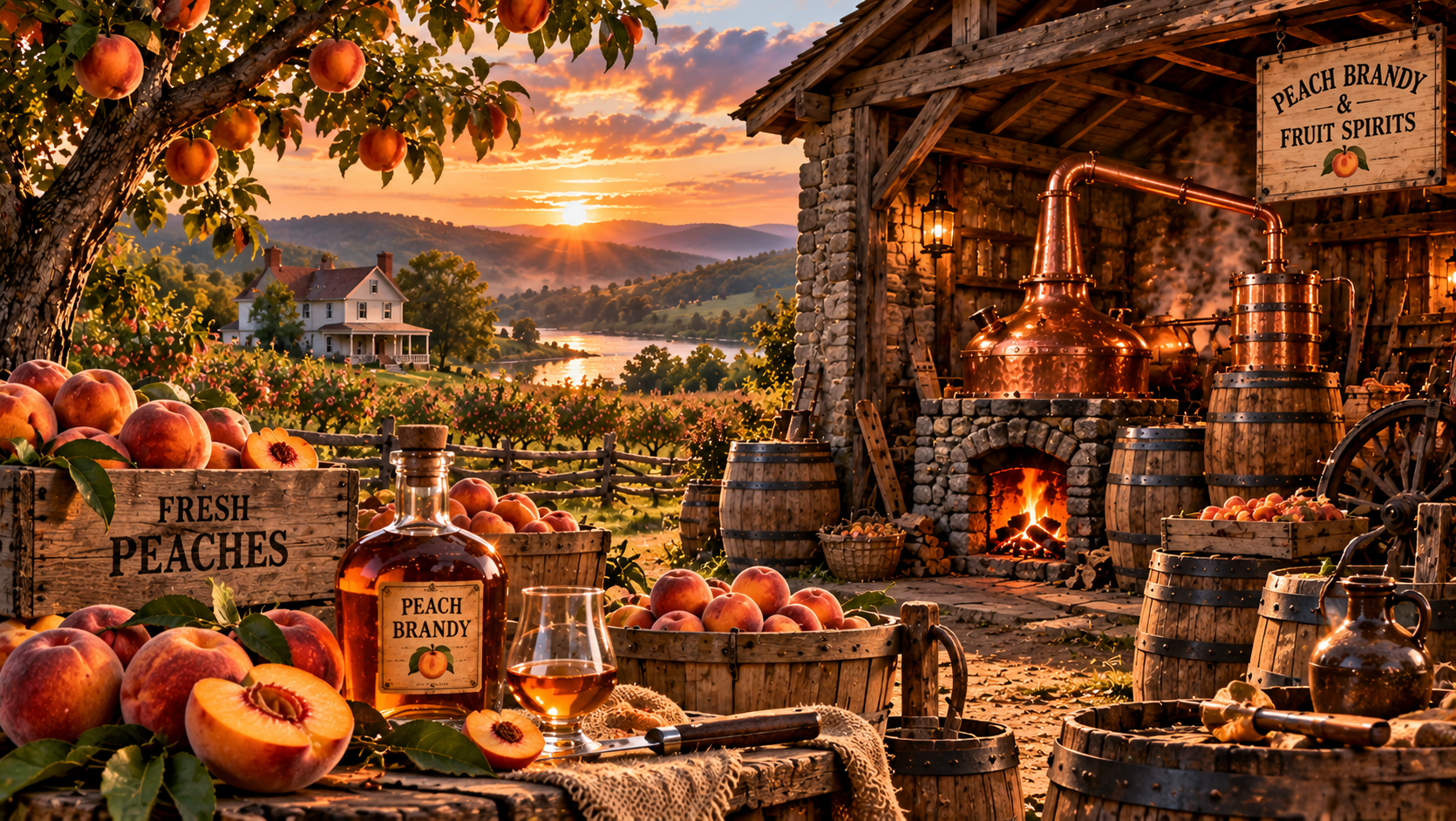
Artistic interpretation of a traditional orchard-inspired fruit brandy setting.
Peaches, Orchards & American Brandy
Peach brandy developed a place in American spirits history as orchards expanded and regional agricultural economies evolved.
Although peaches are closely associated with the South today, fruit-based spirits were not limited to one region or one type of fruit.
Apples, pears, plums, cherries, and other fruits contributed to a diverse family of traditional spirits, each shaped by local resources and customs.
How Fruit Spirits Became Part of the Story
The history of fruit brandy is not a single invention or a single recipe. It reflects centuries of evolving agricultural and distilling traditions.
European Roots
Fruit distilling traditions developed in different parts of Europe, producing regional styles associated with local orchards and available crops.
Colonial America
European settlers brought fermentation and distilling knowledge to North America, where apples, peaches, and other fruits influenced local beverage traditions.
Growing Orchard Regions
Expanding agricultural settlements and orchard cultivation contributed to the development of regional fruit spirits.
Modern Revival
Licensed craft producers continue to explore fruit brandies today, drawing inspiration from historical methods while using modern equipment and regulatory standards.
Not Every Peach-Flavored Spirit Is Peach Brandy
The difference between a fruit-derived spirit and a fruit-flavored spirit matters. Names, ingredients, and labeling standards can describe very different products.
Fruit Brandy
A spirit produced from fermented fruit materials under applicable standards. The fruit itself is the source of the fermentable sugars.
Fruit-Flavored Spirits
A spirit that receives fruit flavoring or related ingredients. Depending on its composition, it may fall under a different labeling category.
“A good orchard tells you where a fruit came from. A good history tells you why folks turned that harvest into something worth remembering.”
There’s More Growing Beyond the Orchard.
Explore centuries of whiskey history, traditional distilling equipment, peach brandy, colonial applejack, and more in Grandad’s complete illustrated digital guide.
Illustrated digital guide · PDF format