Colonial Applejack
Before American whiskey became a national tradition, apples and cider were already part of everyday colonial life. From orchard harvests to early apple spirits, applejack carries a fascinating piece of America’s drinking history.
When Apples Helped Shape America
In colonial North America, apple orchards provided more than fresh fruit. Apples could be stored, cooked, pressed into cider, or preserved in other forms.
Hard cider became an important beverage in many communities, particularly where apples grew well and drinking water quality could vary.
Apple-based spirits eventually became part of this broader cider culture, developing alongside other early American beverages.
From Fruit to American Heritage
Long before modern distilleries and commercial bottling, orchards connected farming, food preservation, cider-making, and local drinking traditions.
A Harvest With Many Purposes
Apples were a versatile crop. Their role in early American life extended well beyond eating fruit straight from the tree.
Colonial Orchards
Settlers cultivated apple trees across suitable regions, establishing orchards that supported households, farms, and local trade.
Cider Traditions
Pressed apple juice could be fermented into hard cider, an established part of early American beverage culture.
Apple Spirits
Some producers turned fermented apple materials into stronger spirits, contributing to the development of American apple brandy and applejack traditions.
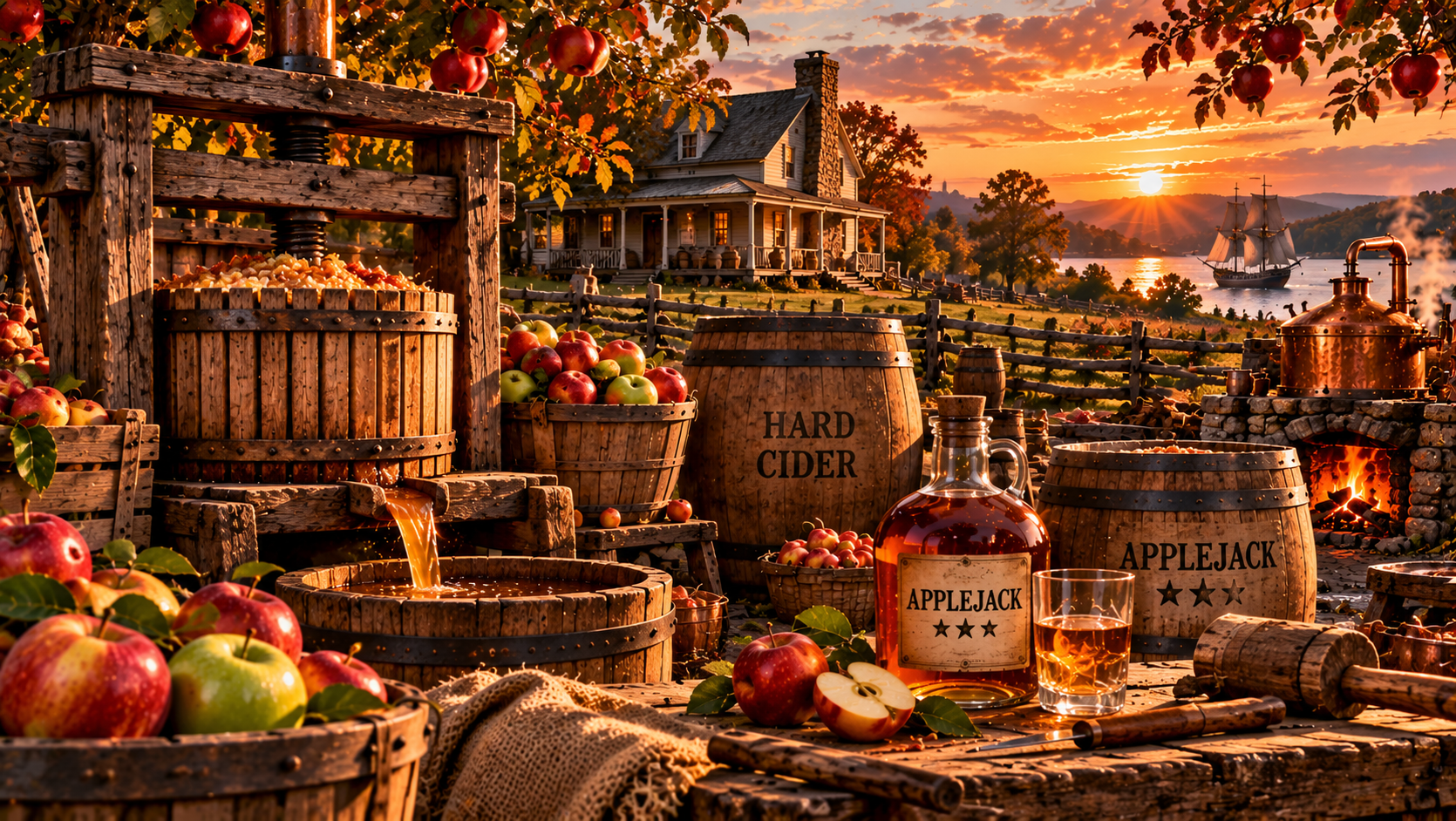
From Cider to Applejack
Applejack became associated with early American apple-based spirits. Its history is closely connected to cider and the different ways people concentrated or distilled fermented apple beverages.
Traditional accounts often discuss freeze concentration, sometimes called jacking, in which freezing and separation can increase the alcohol concentration of cider.
Distilled apple spirits also developed their own traditions. Over time, the term applejack came to be associated with products made through different methods, depending on the period and producer.
Applejack Across the Centuries
Rather than a single moment of invention, applejack reflects changing agricultural practices, beverage traditions, and commercial production.
Orchards and Cider
Apple cultivation and cider production became established in parts of colonial North America.
Apple-Based Spirits
Apple spirits became part of the nation’s developing drinking traditions, with regional differences in production and terminology.
Commercial Distilling
Commercial producers helped establish recognizable American apple brandy and applejack products.
A Tradition Remembered
Applejack and apple brandy remain connected to America’s orchard heritage, while modern products reflect contemporary production and labeling standards.
Not All Applejack Is Made the Same Way
The word applejack has been used across different periods and contexts. Historical techniques and modern commercial products should not automatically be treated as identical.
Historical Freeze Concentration
Some traditional descriptions of applejack involve concentrating fermented cider through freezing and separating ice. This is distinct from conventional distillation and does not reliably remove harmful substances.
Modern Applejack and Apple Brandy
Modern commercial applejack may be a distilled apple-based spirit, and some products may include neutral spirits under applicable labeling standards. Specific definitions depend on the product and jurisdiction.
Concentrating fermented cider can also concentrate undesirable compounds. This historical overview is not a set of production instructions. Alcohol production and processing remain subject to applicable laws and safety requirements.
“An old apple tree can tell you a lot about a place. But the real story begins when you learn what the folks who planted it did with the harvest.”
Eight Chapters. Centuries of Stories.
From medieval aqua vitae and Scottish records to American rye whiskey, Appalachian moonshine, peach brandy, and colonial applejack — explore the history and traditions behind the spirits in Grandad’s complete illustrated digital guide.
Illustrated digital guide · PDF format