The Thumper Still — Why It Was Used
One of the most recognizable pieces of equipment associated with some traditional moonshine stills, the thumper tells a story of ingenuity, vapor redistillation, and regional distilling traditions.
What Was a Thumper?
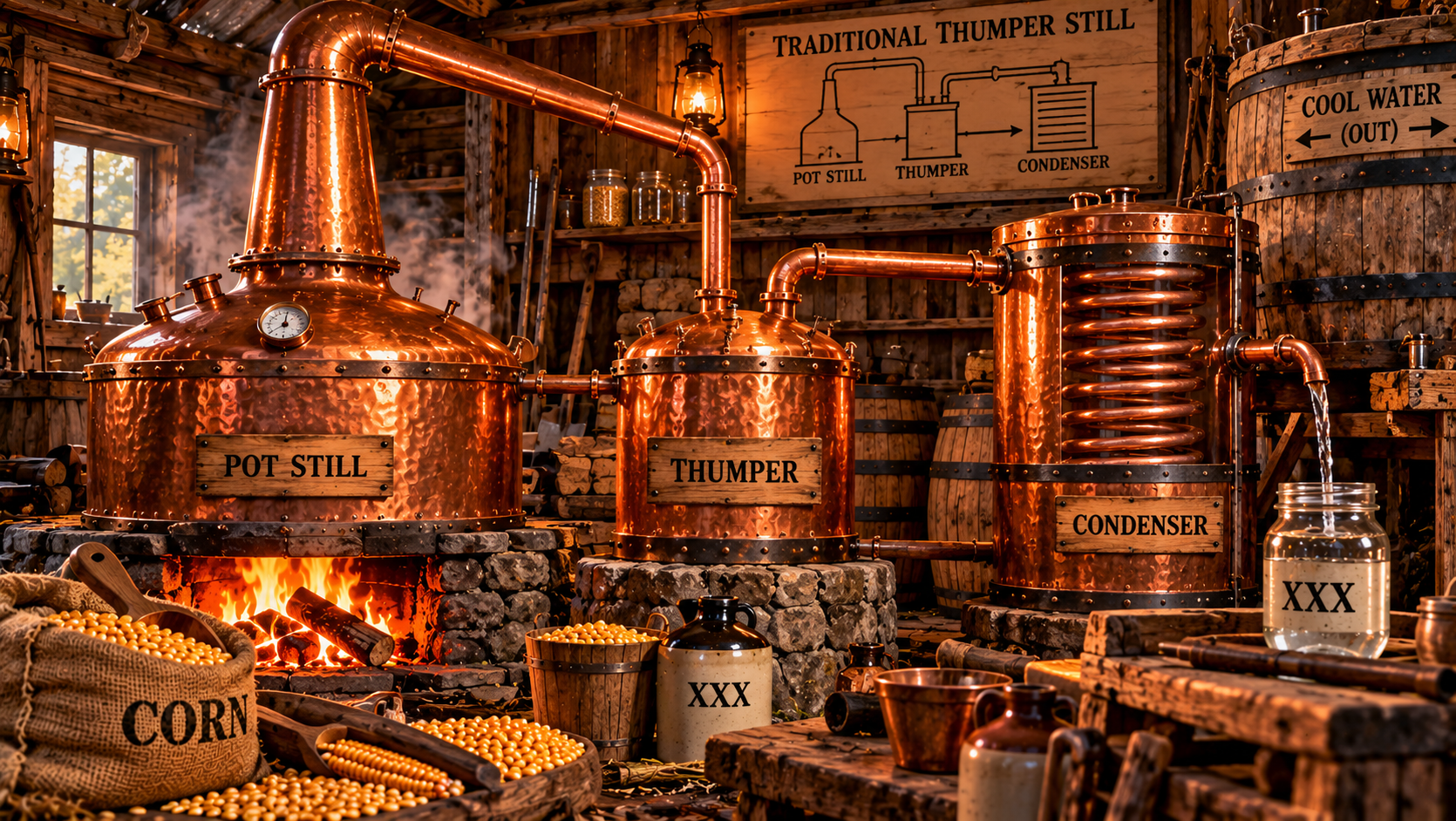
A thumper, sometimes called a thump keg or doubler, is a secondary vessel used in certain traditional distilling arrangements.
In a typical historical configuration, vapor from the primary boiler entered the secondary vessel, where some vapor could condense and the heat could promote further vaporization.
This allowed the system to produce an additional stage of separation without necessarily requiring a separate full distillation run.
Vapor Stages
A primary boiler and a secondary vessel can create an additional vapor-liquid contact stage before vapor reaches the condenser.
A Practical Piece of Equipment
The thumper was associated with certain traditional pot-still arrangements because it could influence spirit strength and separation during a single operating cycle.
Additional Separation
Vapor-liquid contact in the secondary vessel could provide an additional separation effect.
Practical Arrangement
It could add a secondary distillation effect without requiring a completely separate batch run through another still.
Regional Tradition
Thumpers became closely associated with some North American whiskey and moonshine-making traditions.
The Traditional Thumper Arrangement
In some historic designs, the thumper was placed between the main pot and the condenser. The exact arrangement varied between stills.
Where Did “Thumper” Come From?
The name is commonly associated with the rhythmic thumping or pulsing sounds that can occur as vapor enters liquid inside the secondary vessel.
Not every setup produces the same sounds, but the nickname became a memorable part of the equipment’s identity.
Other terms, including thump keg and doubler, appear in descriptions of related traditional equipment, although terminology can vary by region and design.
THUMP
The sound associated with vapor entering liquid helped give the vessel its familiar name.
What a Thumper Doesn’t Do
A thumper has a real function in certain distilling arrangements, but some common claims about it go beyond what the equipment can reliably accomplish.
It Doesn’t Guarantee Safety
An extra vapor-contact stage does not guarantee removal of harmful contaminants or make improperly produced spirits safe.
It Isn’t Required for Every Still
Many legitimate distillation systems use other equipment and methods without a thumper.
It Isn’t a Magic Purifier
Separation depends on the mixture, equipment, and operating conditions. No single component can guarantee purity.
It Doesn’t Replace Legal Requirements
Alcohol production remains subject to applicable laws, permits, and safety regulations.
Distillation equipment can present fire, pressure, and contamination hazards. This page describes historical equipment and is not a set of operating or construction instructions.
“The old-timers had names for everything. But knowing what a piece of equipment was called ain’t the same as knowing what it could — and couldn’t — do.”
There’s More to the Story.
Explore the history of traditional whiskey equipment, fruit spirits, peach brandy, colonial applejack, and more in Grandad’s complete illustrated guide.
Illustrated digital guide · PDF format